


About
About Jabiru
Jabiru is Australia’s leading manufacturer of Light Sport Aircraft and aircraft engines. The company has delivered more aircraft and engines than any other organisation in Australian history, and its aircraft fly today in more than 50 countries. True to a design philosophy built on controlled simplicity, we continually evolve our iconic range of utility aircraft and engines, while developing new aeronautical innovations.
Jabiru products boast an excellent safety record, and we remain committed to our fleet through design, quality, and training.
At Jabiru, every innovation is the result of more than 35 years of experience. Every component is carefully considered, tested, and refined. It sits exactly where it should. To serve its purpose precisely.
By combining robust engineering with the fine demands of the aeronautical art, we turn every innovation into a true expression of simplicity and pure engineering.
Air. Craft. is not just a play on words; it is the affirmation of our commitment to the pilots of tomorrow.
Welcome to Jabiru.


Our journey Genius is 1% inspiration and 99% perseverance.
A vision takes flight
1988 – 1991
In Bundaberg, Rodney Stiff, an engineer, and Phil Ainsworth, in charge of business development, were working together at Toft Brothers on the design and marketing of sugar cane harvesters. In early 1988, they founded Jabiru with a clear ambition: to design a light aircraft made from composite materials that was efficient, reliable, and built to last.
From the outset, Jabiru was guided by a pragmatic and demanding approach to engineering. A simple yet ambitious vision: to create useful, robust, and accessible light aircraft, without compromising on design quality.
The early growth
1990 – 1994
The team grew quickly. John and Don joined the company among its very first employees and would each dedicate more than twenty-five years to it. Jamie also joined the adventure in its early days.
After four years of development, the Jabiru LSA 55/2K received type certification from the Australian civil aviation authority under the CAO 101.55 standard, comparable to what would later become the FAA’s Primary category in the United States. The type certificate was issued on 1 October 1991.
Barely a month later, Italian engine manufacturer IAME-KFM112M announced it was ending production of its aircraft engines. Drawing on their industrial experience, Rod and Phil immediately recognised the strategic stakes: they would also need to master engine manufacturing. Jabiru then began developing its own range of light aircraft engines, from 30 to 120 hp.
After an intensive research and development programme, the Jabiru 1600cc engine was developed in just 18 months. In March 1993, it was approved for installation on Jabiru aircraft. Between April 1993 and March 1996, 54 aircraft fitted with this engine were produced.
In 1994, Jabiru showcased its 1600 aircraft and engine at Oshkosh for the first time. The market response was particularly positive, confirming the brand’s potential, but also revealing the need to develop a larger-displacement engine.
Opening up to the international market
1995 – 1999
Development of the 2200 engine began immediately. Unveiled at Sun ‘n Fun in 1995, it entered production that same year.
At the same time, Jabiru expanded its offering by also providing its aircraft as kits for amateur-built construction, in the Experimental category. A major documentation effort was launched to develop a complete assembly manual based on the company’s quality manual.
In June 1995, the first kits were shipped to the United States. On 8 February 1996, the FAA officially confirmed the eligibility of the Jabiru SK for airworthiness certification under FAR 21.191(g).
In 1997, Jabiru developed the UL model to meet European requirements for the 36-knot category. This version is notably distinguished by a wider wingspan and a longer fuselage.
In 1998, another milestone was reached with CASA type certification for the Jabiru LSA55/3J and the 2200J engine, while development of the 3300 engine began. The team also continued to grow.
Growing recognition
2000 – 2004
International expansion continued. In August 2001, the South African Civil Aviation Authority approved the Jabiru J200, SP, UL, SK, and J400 models, as well as the 2200 and 3300 engines and Jabiru propellers.
Driven by its export momentum, Jabiru Aircraft Pty Ltd received several accolades, including Winner of Small to Medium Manufacturer 2002 and Runner Up Exporter of the Year 2002.
Jabiru had by then established itself as a recognised player in light aviation, both in Australia and internationally.
Industrial growth and the shock of the global crisis
2005 – 2009
On 1 July 2005, Rod Stiff became the sole owner of Jabiru.
Certifications and approvals continued to accumulate: UL-D UK Microlight approval in 2005, J160C certification that same year, Croatian type certification in 2008, followed by certification from China’s CAAC in 2009, and then Indonesia.
In 2006, Rod Stiff was awarded the Medal of the Order of Australia in recognition of his contribution to Australian aviation. In 2009, he received the prestigious Dr August Raspet Memorial Award at Oshkosh, becoming the first non-American to be honoured in this way for his contribution to light aircraft design.
On the industrial front, 2006 also marked the delivery of the 1,000th Jabiru. The Bundaberg site doubled its capacity with a new building. In 2007 and 2008, the company reached a remarkable production peak, with 20 airframes and 90 engines produced each month.
This growth relied in particular on a strong regional subcontracting network. Some manufacturing was entrusted to local Bundaberg companies, while airframe production was gradually structured between South Africa and Australia, and CAMIT took over engine manufacturing.
Then came the global financial crisis of 2007 to 2009. Like the rest of the industry, Jabiru experienced a sharp slowdown. Sales of new aircraft and engines fell sharply. The company decided to stop airframe production in Australia and rely on its South African partner instead. At the same time, CAMIT chose to produce its own version of the engines, putting it in direct competition with Jabiru.
Pressing on through turbulence
2010 – 2014
Recovery remained gradual, driven largely by export markets. Canada issued type certificates in 2010, while the J230D was certified in South Africa.
In 2013, Jabiru composite propellers were launched on the market, reflecting the company’s constant drive to develop its product range.
In late 2014, the publication of an ATSB report on engine failures in light aviation led CASA to impose significant operational restrictions on aircraft fitted with Jabiru engines. This decision would profoundly affect the company and its environment.
A period of intense pressure
2015 – 2019
CASA Regulation 292/14, which came into effect on 23 December 2014, imposed heavy operational restrictions on aircraft powered by Jabiru engines. Its impact was immediate across the entire ecosystem dependent on the brand.
These restrictions remained in place until 1 July 2016, when new regulations allowed them to be lifted, provided the manufacturer’s maintenance programme and several specific service bulletins were followed.
No other national authority took equivalent action against Jabiru products.
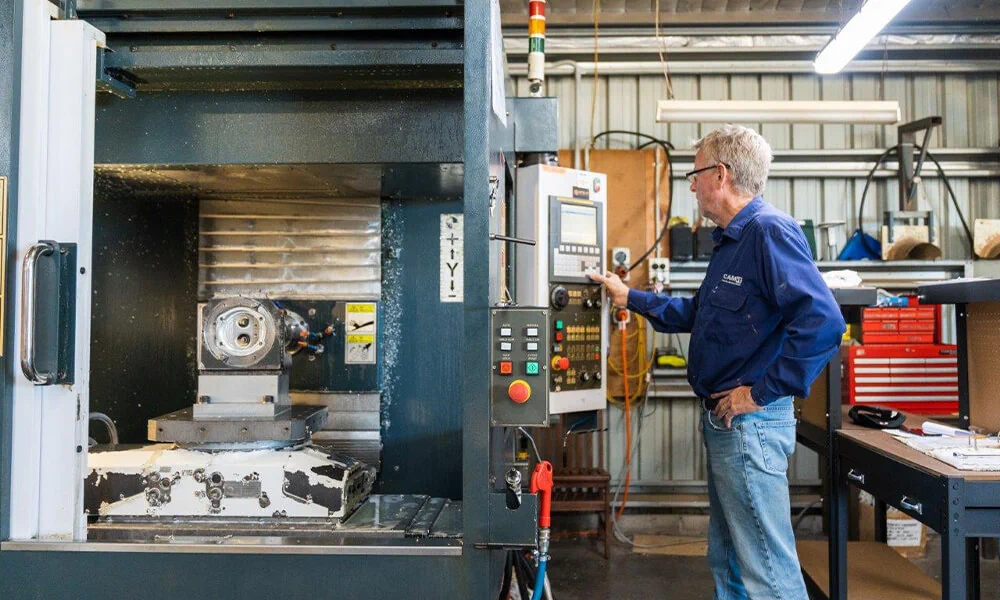
In 2016, CAMIT entered administration, prompting Jabiru to bring engine manufacturing back in-house. The company then developed a highly advanced machining workshop and engine shop, and subsequently allowed its CASA production certificate to lapse.
From 2017 onwards, Jabiru evolved its business model by gradually moving away from traditional certified approvals, adopting ASTM specifications and self-certification as the foundation for development, and refocusing its activity on the Light Sport and Experimental segments.
Rebuilding and looking ahead once again
2020 – 2024
Like the rest of the industry, Jabiru felt the direct impact of the COVID-19 crisis. Disruptions to supply chains, along with longer lead times and higher shipping costs, profoundly transformed the industrial landscape.
Faced with this new reality, Jabiru rebuilt a more integrated, resilient, and self-sufficient organisation. A second generation of employees gradually took over, while know-how was brought back in-house, particularly in the composites workshop.
On 4 May 2023, Rod officially handed over leadership to Mick Halloran. A few months later, the FAA released its proposed MOSAIC rule, which could open up new possibilities for the entire Jabiru fleet, particularly regarding full factory-built deliveries.
At the same time, Jabiru signed a contract with the Defence Innovation Hub to develop a logistics drone capable of carrying 50 kg over 150 km. Sixteen months later, the first controlled flight of the JCQ50 took place, nearly twenty-five years after the very first flight of a Jabiru aircraft.
In 2024, the company secured an EATP grant to develop the Jabiru Electric Motor, intended for both crewed and uncrewed platforms. A new chapter begins. Jabiru now aims to position itself as a leading global player in aircraft and propulsion systems for payloads of 50 to 500 kg, regardless of future regulatory or technological frameworks.
The story continues. With the same conviction. And the same rigour.
engine
The story of the engine
When Rod Stiff and Phil Ainsworth launched the Jabiru project in 1988, one thing quickly became clear: the engines available for a light aircraft of around 400 kg did not meet the expected level of reliability.
The first twenty Jabirus were fitted with KFM engines. But no sooner had the design been approved by the Australian authority than production of this engine stopped. According to the story passed down within the company, it was on the flight back from Italy, after an unsuccessful attempt to convince KFM to continue manufacturing, that Rod sketched the first lines of the Jabiru 1600 engine in his notebook.
Fifty-four units of this engine would be produced.
But as early as Oshkosh 1994, the market clearly expressed the need for a more powerful engine.

The 2200 prototype
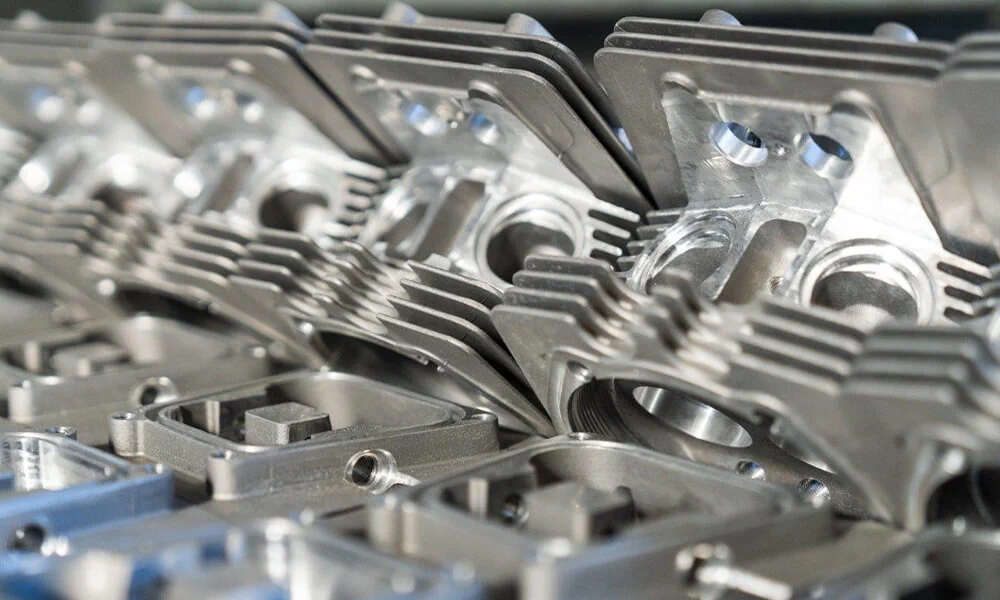
The 2200 prototype largely retained the architecture of the 1600, while incorporating a major shift in manufacturing processes. Cast or forged parts gradually gave way to CNC-machined components, a technology still relatively new at the time. Jabiru also used automotive-derived components to control costs and ensure good availability of spare parts.
One of the most significant design changes was increasing the number of bearings and positioning one between each crankpin. This modification resolved the main weakness of the 1600, whose crankshafts had been prone to failure between 400 and 700 operating hours.
The GEN1 engines
The first series of twenty-four GEN1 engines went on sale in 1995 and was an immediate success. The design changes to the crankshaft and camshaft proved particularly effective. Thanks to CNC machining, the design could also evolve quickly, in a process of continuous improvement. Engines returning to the workshop for maintenance or overhaul were then gradually upgraded to the latest available standard.
As with any engine manufacturer, supply chain stability remained a strategic challenge. In 2002, when Tasmanian supplier ACL changed ownership and stopped wanting to supply the aviation sector, Jabiru had to take over the design of its own pistons. Many developments would follow over the years.
In total, 3,027 GEN1 engines were produced across the 2200 and 3300 series, making Jabiru the only Australian company to have manufactured more than a thousand aircraft engines.
In 2006, a new technical development was introduced with the adoption of flat-faced hydraulic lifters, eliminating the need to adjust rocker clearance and reducing maintenance workload.
Through-bolt failures later appeared, however. After several design changes and in-depth analysis, the cause of the phenomenon was identified: a natural frequency of the new crankcase was resonating with the crankshaft and through-bolts, generating vibrations that were detrimental to their service life.
The GEN3 engines
In 2012, the GEN3 version introduced roller lifters on the camshaft to improve wear resistance. The crankcase was also redesigned to eliminate the vibration issue, significantly improving the durability of the entire range.
Despite these challenges, Jabiru continued to invest in its engine programme and to support its fleet. Maintenance and modification programmes were rolled out, allowing these engines to continue operating safely. In total, 3,107 GEN2 engines and 445 GEN3 engines were produced across the 2200 and 3300 series.
Launched in 2017, the GEN4 engine embodies the culmination of twenty-six years of accumulated experience. It brings together successive technological advances and all the expertise Jabiru has developed in designing and manufacturing, on a small scale, an aircraft engine that is reliable, high-performing, and affordable.

